Official State Symbol
Coal
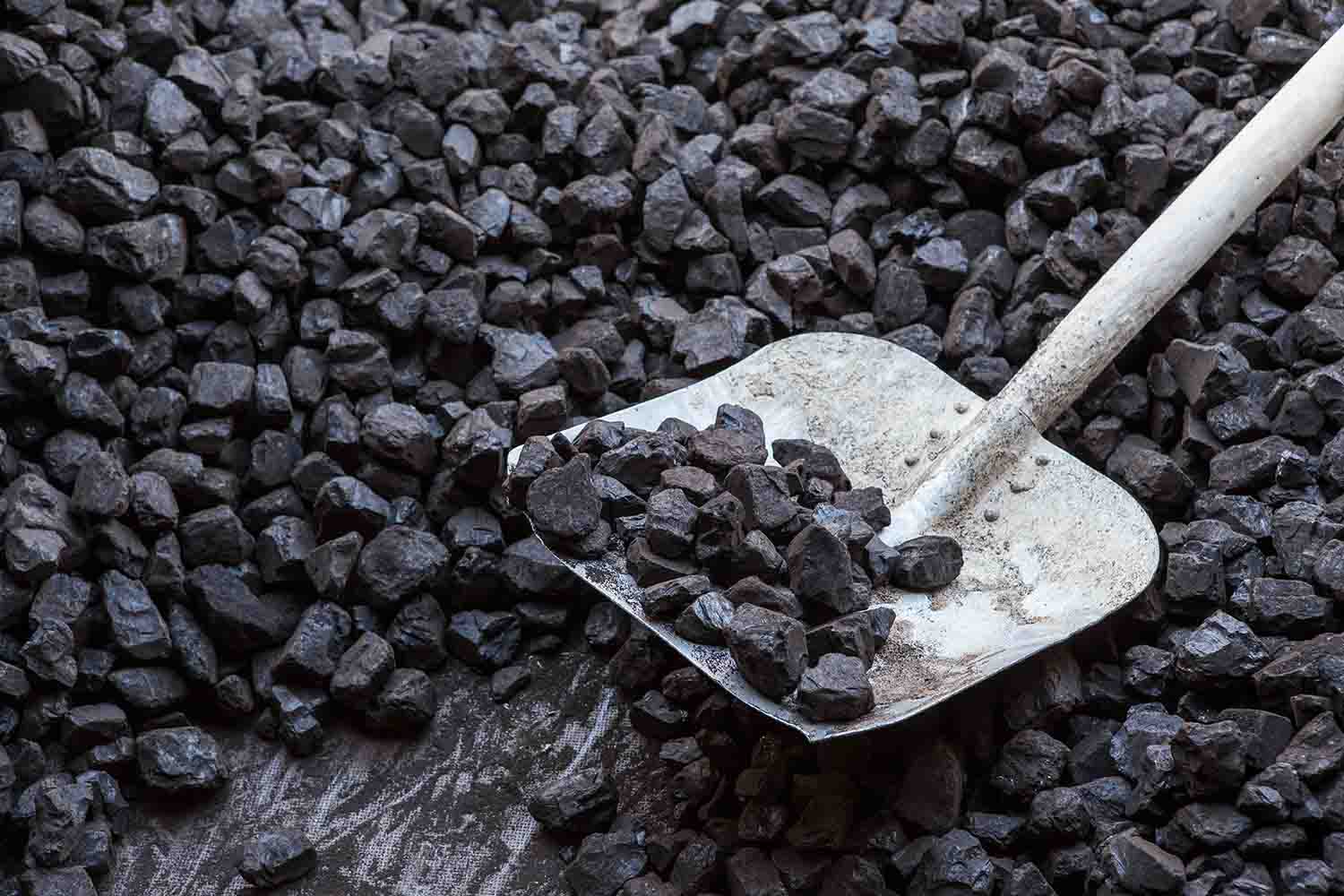
About Coal
Coal was selected as the state rock of Utah by an act of the legislature in 1991 (Utah Code). Representative Mike Dmitrich (R-Price), sponsored H.B. 95 to honor the thousands Utahns who have worked in the coal industry and the contribution coal brings to the state’s economy. Other legislators lobbied for the red rock of Southern Utah as a more fitting state rock. There was also a debate about whether coal was a rock or a mineral. The Utah Geological Survey clarified that coal is a sedimentary rock. H.B. 95 was signed into law on date by Governor Norman H. Bangerter on April 29, 1991.
Coal is a sedimentary deposit composed predominantly of carbon. It is black or brownish-black. Coal originates as plant matter that accumulates in wetlands and bogs. It begins to form when anaerobic bacteria break down plant material and convert it to peat through the removal of oxygen and hydrogen. The peat is then buried by sediment and more plant material, raising the temperature and pressure of the peat. As the peat compresses, water and methane gas are forced out, leaving an increasing proportion of carbon. With increasing heat and pressure the peat is converted successively into lignite, subbituminous coal, bituminous coal, and anthracite. Most of the coal mined in Utah is bituminous.
Coal is used during the coking process in steel production, and is burned in power plants to produce heat and electricity. Almost all of Utah’s mined coal (85%) is burned at power plants to produce electricity. Coal is found in 17 of Utah’s 29 counties, but coal mining is primarily concentrated in Emery, Carbon, and Sevier counties. Utah’s coal production is 14-16 million tons a year.


